The History of QR Codes: From Toyota Factory Floors to Global Ubiquity
Discover how a simple tracking system invented in 1994 became the invisible infrastructure of modern life — from Japanese car plants to restaurant menus worldwide.
Walk into any restaurant, board any flight, or attend any event in 2026, and you will likely scan a QR code within the hour. These pixelated black-and-white squares have become so deeply woven into daily life that it is easy to forget they were invented just three decades ago — and originally designed for a purpose most people have never experienced firsthand. The story of the QR code is not just a story about technology. It is a story about problem-solving, open standards, and the unpredictable ways a single invention can outgrow its original context.
1994: The Birth at Denso Wave
The QR code was born in Japan in 1994, inside a subsidiary of Toyota called Denso Wave. At the time, Denso manufactured automotive components, and the company faced a frustrating logistical problem. Traditional one-dimensional barcodes — the vertical-line patterns you still see on grocery packaging — could only hold about 20 alphanumeric characters. That was barely enough to encode a part number, let alone the richer information Denso needed to track components through its supply chain.
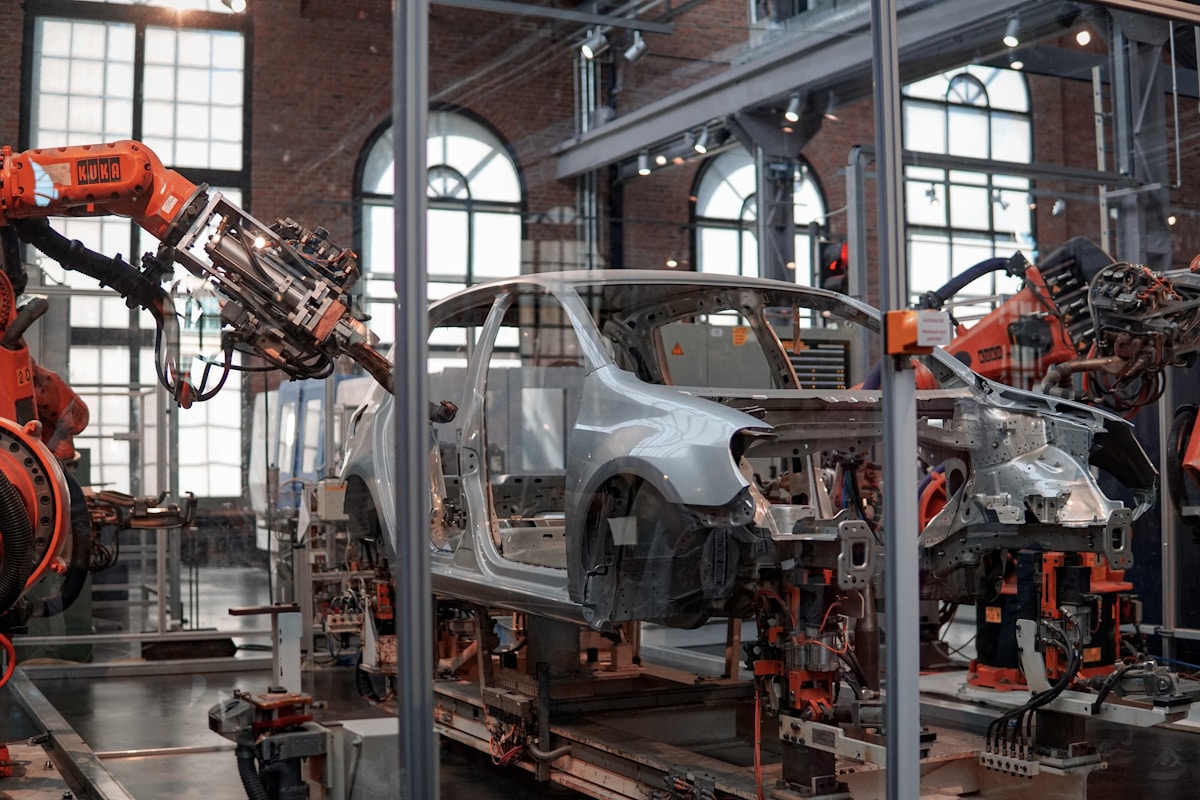
Masahiro Hara, an engineer at Denso Wave, led the team tasked with solving this bottleneck. Hara had noticed that barcode scanners were struggling to keep up with the volume and complexity of data moving through Toyota’s factories. The team needed a code that could store more information, be read from any angle, and recover quickly even if partially damaged or obscured by dirt — a common problem on factory floors.
Why "Quick Response"?
The name QR Code stands for "Quick Response." This was not marketing spin. It was a literal description of the design goal. Hara’s team optimized the code for scanning speed. A QR code can be read up to ten times faster than a traditional barcode because its two-dimensional matrix structure allows the scanner to capture data both horizontally and vertically at the same time. The characteristic three large squares in the corners are position detection patterns that let a scanner instantly recognize the code and its orientation — no need to align it perfectly.
Another key innovation was error correction. QR codes incorporate Reed-Solomon error correction, a mathematical technique that allows the code to be read even if up to 30% of it is damaged, dirty, or covered by a logo. This redundancy was essential for industrial environments where labels could be scratched or smudged, and it remains one of the reasons QR codes work so reliably in the real world today.
The Open Standard That Changed Everything
Denso Wave made a decision in the 1990s that would ultimately determine the QR code’s global fate: the company chose not to enforce its patent rights. While Denso held the patents for QR code technology, it made the specification freely available for anyone to use. There were no licensing fees, no royalty agreements, and no restrictions on who could generate or scan QR codes.
Denso Wave made a deliberate choice not to enforce its QR code patents, allowing anyone in the world to use the technology freely without licensing fees or legal barriers. This open approach was rare for the era and proved decisive in the QR code's eventual global adoption.
This open approach was rare for the era. Most proprietary coding systems — think of the many competing barcode formats that existed in the 1980s and 1990s — fragmented the market and slowed adoption. By making QR codes free and open, Denso Wave ensured that any manufacturer, software developer, or business could adopt the standard without legal risk or financial barrier. In 2000, the QR code was officially approved as an international standard under ISO/IEC 18004.
Early Adoption: Japan Leads the Way
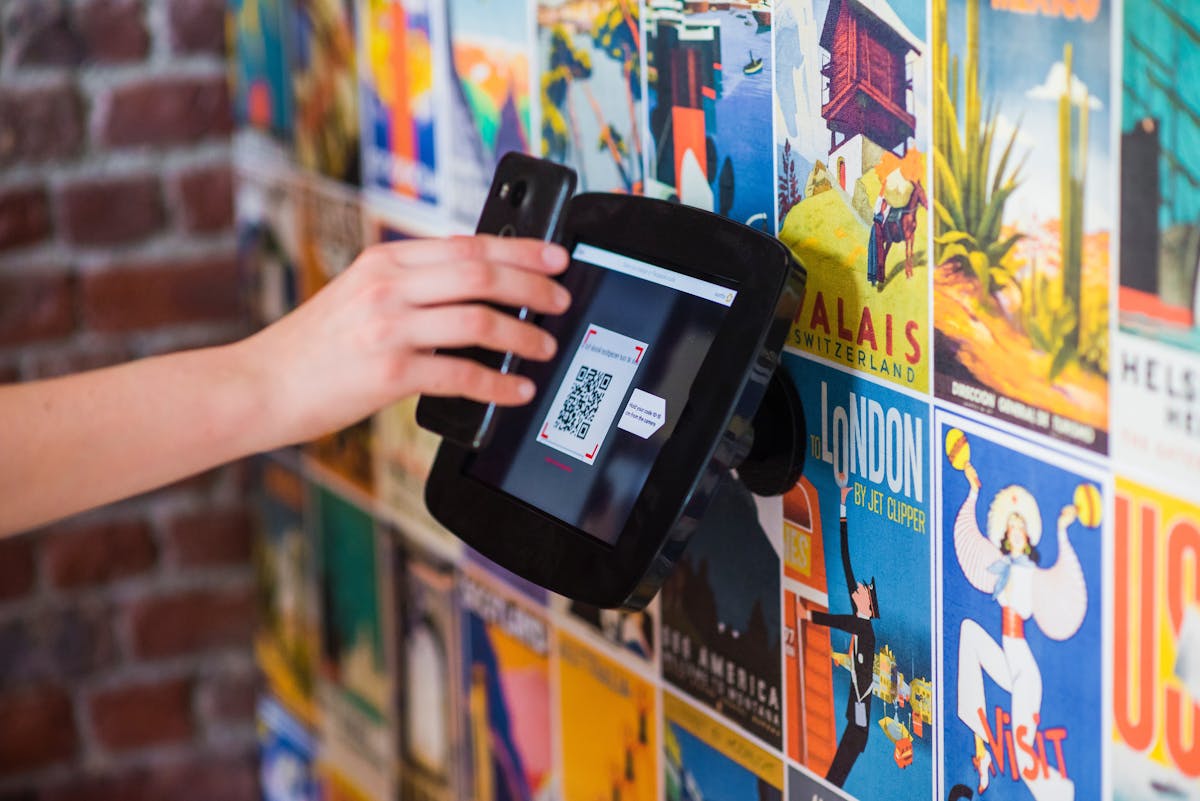
For the first decade of its existence, the QR code remained largely a Japanese phenomenon. The country’s advanced mobile phone market created the perfect conditions for early consumer adoption. By the early 2000s, Japanese feature phones began shipping with built-in QR code readers. Consumers used them to scan codes printed on advertisements, business cards, and product packaging to access websites without typing URLs on tiny numeric keypads.
Mobile payments also emerged early in Japan through QR codes. Services like FeliCa and QR-based wallets allowed commuters to pay for train tickets, vending machine purchases, and convenience store items by simply scanning a code at the register. While Western consumers were still swiping magnetic-stripe credit cards, millions of Japanese consumers were already living in a contactless QR economy.
The Smartphone Revolution
The QR code’s global breakout moment arrived with the smartphone. When Apple released the iPhone in 2007 and Android followed shortly after, the technology that had been confined to Japanese mobile phones suddenly became available to billions of people worldwide. Yet adoption was initially slow. Early smartphone cameras were not optimized for code scanning, and users had to download dedicated QR reader apps — a friction point that limited mainstream use.
The turning point came in 2017, when Apple integrated native QR code scanning directly into the iPhone camera app with iOS 11. No app download required. No setup. Users simply pointed their camera at a code, and a notification appeared. Android manufacturers followed suit, embedding QR readers into their native camera applications. At that moment, QR codes transitioned from a niche technology to a universal utility.
COVID-19 and the Global Explosion
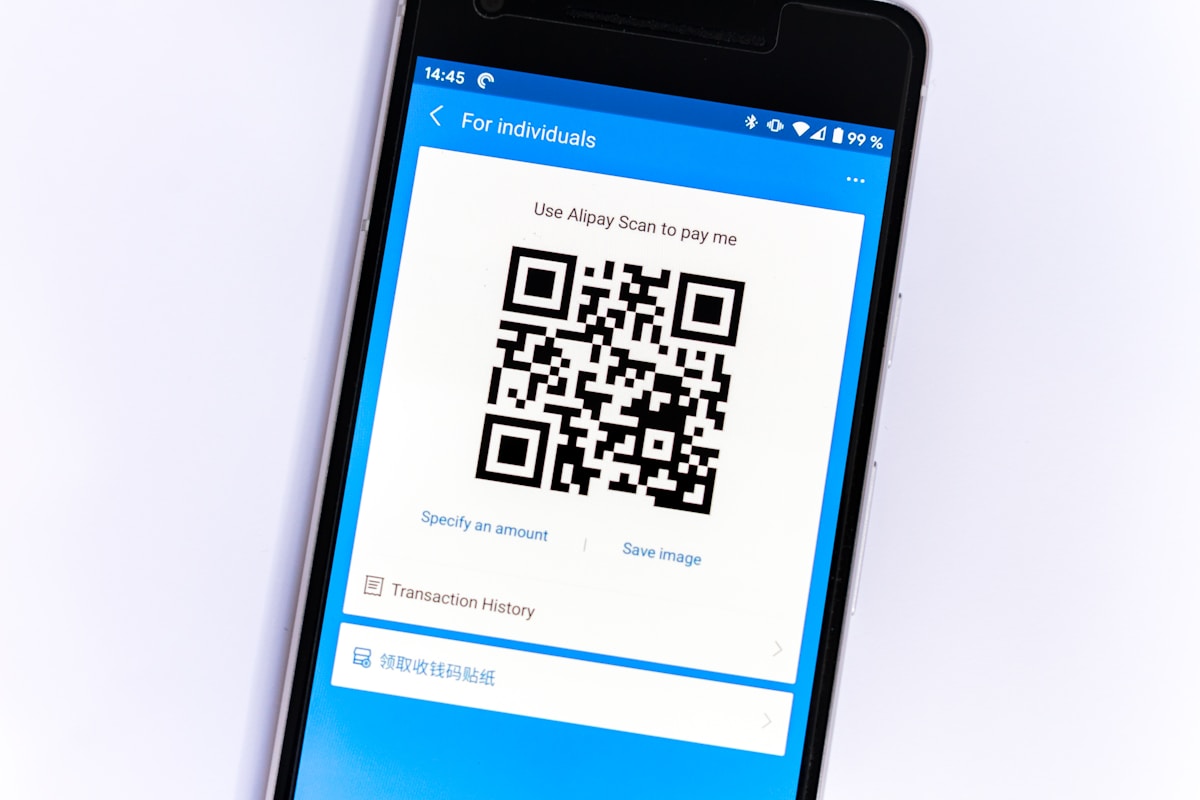
If smartphones made QR codes technically accessible, the COVID-19 pandemic made them socially essential. In 2020, businesses worldwide needed contactless ways to share information. Restaurants replaced physical menus with QR codes printed on table tents. Retailers used them for contactless payments. Governments deployed them for vaccine certificates, travel passes, and exposure notification systems.

The scale of this shift was staggering. According to industry estimates, global QR code usage grew by over 750% between 2018 and 2021. In the United States, a country where QR codes had previously struggled to gain traction, adoption surged as consumers became comfortable scanning codes for everything from tipping servers to viewing apartment listings. The pandemic effectively completed a decades-long education campaign in a matter of months.
QR Codes vs. Barcodes: What Makes Them Different?
To understand why QR codes succeeded where other 2D codes failed, it helps to compare them directly with traditional barcodes. A standard UPC barcode stores roughly 12 numeric digits. A single QR code can store over 7,000 numeric characters, 4,000 alphanumeric characters, or 1,800 Kanji characters. That is enough space for an entire URL, a vCard contact, a WiFi network configuration, or a short text message — all without needing an internet connection.
- Storage capacity: Barcodes hold ~20 characters; QR codes hold up to 7,089 numeric characters.
- Read direction: Barcodes must be aligned horizontally; QR codes can be scanned from any angle.
- Error correction: Barcodes have minimal redundancy; QR codes can recover from 30% damage.
- Data types: Barcodes encode numbers; QR codes encode URLs, text, contacts, WiFi configs, and more.
The Future: QR Codes Are Not Going Anywhere
Today, QR codes are embedded in national payment infrastructures from India to Brazil. They authenticate products in supply chains, verify event tickets, enable passwordless WiFi access, and bridge the gap between physical signage and digital content. New standards like QR code payments (EMVCo) and encrypted QR codes for secure authentication are pushing the technology into areas its inventors never anticipated.
Masahiro Hara, now widely recognized as the father of the QR code, has expressed both pride and surprise at how his invention evolved. What began as a tool for tracking car parts has become a universal language for connecting the physical and digital worlds. And because Denso Wave made the standard open and free, that evolution belongs to everyone — from the smallest coffee shop printing a menu code to the largest governments managing digital identity.
What began as a tool for tracking car parts on a factory floor has become a universal connector between the physical and digital worlds. Because Denso Wave made the standard open and free, that evolution belongs to everyone — from the smallest coffee shop printing a menu code to the largest governments managing digital identity.
The next time you scan a QR code to view a menu, connect to WiFi, or check into an event, remember that you are participating in a story that started on a factory floor in Japan three decades ago. The technology may be invisible, but its history is anything but.